
Nr. 134 / 20 dhjetor 2009


Facing the violators of free vote The Albanian politics of these 19-20 years of democracy is strongly based on the tradition inherited through years from one generation to another. There are many families that genetically support the left-winged ideals of the Socialist Party, the most important political subject in the Albanian opposition. A distinguished heir of this line is the young Emiljan Memçaj, born in July 16, 1984. Among the socialists of Shkodra and around the family Memçaj is known as a strong supporter of the Socialist Party. Since 1991, when this party was founded, in Reç of Malësi e Madhe, in the Memçaj family the Socialist Party found an extraordinary support. Patriotic ideals mould with those of Social-Democracy, fed by his family, led Emiljan Memçaj too toward the Socialist Party. He firstly was involved in the Albanian Eurosocialist Youth Forum (FRESSH), and very soon was very active and was elected in the leadership for Malësi e Madhe. During the Parliamentary elections of 2005, Emiljan had to face the deep problems of the Albanian transition mostly related to the free vote. As a progeny of a family known as a supporter of the Socialist Party, Emiljan was engaged as a commissioner in the poll of Reç, Malësi e Madhe. In this position he learned that it was early to speak about free vote and democracy in Albania. Convinced in his ideas, Emiljan didn’t accept the financial offerings coming from the DP and the right-winged forces, being strongly determined not to allow any manipulation on the vote results at the poll he was assigned to. Despite death threats from those considered “the strong” of the area, supporting the Democratic Party, Emiljan didn’t allow anyone to steal votes where he was assigned to, as it happened in many other polls during elections of 2005. After the Democratic Party came on power, after the elections of 2005, Emiljan Memçaj became a target of criminal groups supported by the newly formed government. On September 19, 2005, just a few months after the elections and after the government “Berisha 1” was formed, he was attacked by masked people, who were dressing police uniforms and driving cars without number-plates. The young man escaped sure death only by chance, for people coming from a family feast were passing by. They also helped Emiljan, in that difficult state he was, to reach home. After escaping this criminal act, the young had to hide for months, while the aggressors in institutional dress menaced his family asking them to tell where Emiljan was hiding. As for irony, the same situation would repeat 4 years after, in the parliamentary elections of 2009. Thinking the situation was calm, with the request of the Socialist Party, Emiljan was engaged again in the parliamentary elections, now as an observant. In Malësi e Madhe, one of the areas where, according to the opposition, there was great manipulation by the Democratic Party in disadvantage of the Socialist Party, Emiljan Memçaj was again able to keep untouched the vote. In his position, he forced the commissioners in the polls to follow rigorously the rules established by the Elections’ Code, while the votes attempted to be manipulated were counted many times and exactly. After Emiljan did his job with clear success as assigned by SP, he was active even in further movements of the opposition, which chose not to go to Parliament because of the manipulation of the voting results, while the report of OSCE and ODIHR admitted that in 22 from 66 polls, counting was bad or very bad. While in his way back from the protest organized in Sports Centre of Shkodër, Emiljan was followed by a car with foreign number-plate, driven by a police officer in civil dress. Emiljan speeded up to escape while his car was shot by the aggressors. Since that day, none knew anything about the 25 years old Emiljan Memçaj, who might be a sacrificed victim of the political hatred, with the only guilt of believing in the sanctity of the vote what was also the cause of twice death threats, as well as of many other attempts to eliminate him. Malocaj family endangered by the blood-feud Blood-feud is taking many innocent human lives. Only in the last 20 years have been killed about 19 000 Albanians. As a tradition inherited from primitive justice of the past, blood feud in the past two decades has witnessed different case after case of defects in the whole war against criminality and mistrust that the community has to the police and the system of justice. Thereby, because of not functioning the rule of law, people in conflict have chosen to act in self-justice according to the Canon (Kanun) of Leke Dukagjini. One of the many dramas of the Albanian society is also the case of the citizen Gjergj Ndrek Malocaj, born on 14.04.1964 in the village of Trush from the prefecture of Shkodra. Gjergj Ndrek Malocaj and his family are in hiding since 22.02.2008 and were forced to flee from their homes in the village of Trush. Although they are innocent, they are victims of medieval customary laws of Canon (Kanun) of Leke Dukagjini. It was a woman called Luçe Rrethi, a resident of the same village, who on 22.02.2008, for trivial reasons killed the co-peasant Nikoll Malocaj. Shortly afterwards, within two hours after the murder, the victim’s brother, named Gjergj Gjoke Malocaj has revenged Luçe Rrethi killing with gunfire the author of the crime Luçe Rrethi, thus committed self-justice. From this moment, the family Malocaj fell into two tribe blood-feuds, one with the family where Luçe Rrethi was married and the other with the family she was born. This way, Gjergj Ndrek Malocaj with his family, though innocent, start living in hiding. Similar to him are also his brothers Broz Malocaj, Lodovik Malocaj and Nush Malocaj which have abandoned dwellings, after they are afraid from the bullet of the revenge. Even the sister of Gjergj Ndrek Malocaj, called Nora Malocaj with her family has been in nearly two years living underground. This is the grim picture of the life of the Albanian reality, a reality which ranks Albania in the most bizarre countries of the world, where conflicts are not subject of the law, but the Canon (Kanun) medieval norms, which are followed up to our days, as holy customary laws. Ortjon Shehu (Hajdari) – an innocent victim of Medieval Canon laws Blood-feud in the Canon (Kanun) of Leke Dukagjini’s feudal law is known also today as a capital punishment. It is taking the life of an individual who has committed a serious offense against life, family, property, honor and dignity of another. Blood-feud is to take revenge by killings. Charged with its execution is the injured party, which is forced to either forgive or take revenge. The guilty party is forced to go on strike (isolation) as a rule of the customary law. With the confinement of the guilty party, starts the right of negotiation for reconciliation that can be done with financial compensation or apology. Canon suggests reconciliation with forgiveness, considering forgiveness, as a high level of morality and courage. But beating is more difficult to forgive, because according to the custom the shame lives. The person who was beaten is always seen with a bad eye for not taking avenge, so he lives with shame. This has happened also with the Albanian citizen Ortjon Shehu (Hajdari), born in Lushnje on 02.08.1977. Many years ago, precisely in March 1996, Ortjon Shehu (Hajdari), who lived in neighboring Greece, decided to visit the northern town, Shkodra. Having touring the beautiful city and very characteristic of modern cafés, in the evening he went to a bar near the monument of national hero Isa Boletini in the city quarter of “Perash” in Shkoder. There, after having some drinks, he replicated with the citizen Gjelosh Kapaj from Dukagjini, precisely from the native region of Canon of Lek Dukagjin. Kapaj, a problematic person known in the North for creating messy situations, has exacerbated also this situation as a result of drinking too. He has created a lot of mess in the café and being with friends too, they beaten badly Ortjon Shehu (Hajdari). Amid the turmoil Ortjon Shehu (Hajdari), in self-defense, has found a chance and punched in the face the aggressor Gjelosh Kapaj. As many local people managed to prevent the conflict to end with the murder, helping so-called Ortjon Shehu (Hajdari) to leave the café in speed, and he succeeded to travel back to the Greek state. But after several months, Gjelosh Kapaj has found the address and threatened and forced the innocent citizen Ortjon Shehu (Hajdari) to live in hiding (isolation). After so many years, the Association for Peace and Reconciliation Missionaries of Albania and some of his friends have said to him, to come in Albania in order of reconciliation. And Ortjon Shehu (Hajdari) did so. He came recently and he did attempts for several months to reconcile with his aggressor, but he did not only fail leveling the conflict, but Gjelosh Kapaj organized many others people to kill him. In these conditions, the Albanian citizen Ortjon Shehu (Hajdari) is forced like around 10.000 other Albanians to live underground, fearing that a bullet would kill him, only because he defended himself against a problematic person. The Editorial Office Mother and daughter, victims of family violence Conflicts solved with self-justice Is there “Mafia” in Albania!? In first hand, we think it is useful to tell what is “Mafia” in itself. The term “Mafia” is a very known term all over the world, through which it is characterized a particular typology of the organized crime. The term “Mafia” was firstly used to point out a criminal organization coming from Sicily, called “Cosa Nostra” (Our Case), what was firstly made known to the world during the process of the first Italian-American repented of “Mafia”, Joe Valachi. The first time the word “Mafia” was officially used, now all over used as a to determine the “organized criminal organizations”, in a report of Palermo’s chief Prosecutor in 1865, Filippo Antonio Gualtiero. Today, the origin of the term “Mafia” is still mysterious. The term “mafiusu” shows a person, an object or a certain ambient or a community. A popular house, well-stabilized, clean and ordered is a “mafiusedda” (mafia’s) house and only after the investigation of the Palermo’s Prosecution is obligated to present all the bad things. After this explanation, forced somehow, as Albania appeared to be a source of Mafia, according to our politicians’ affirmations, let’s get back to our reality. The Albanian Government is an example of the flourishing Mafia on power, as well as the official affirmation of the opposition led by Edi Rama. We’re not stopping here in quoting particular cases, as they are quoted every minute by the political leaders of the opposition through mass-media. Tirana’s Municipality is the center of continuous generation and development of Mafia, even of the Labourists. Probably, this last one is somehow connected to the Party of Labor. This is what declares the Prime Minister Sali Berisha, not only about the institution led by Edi Rama since 9 years now. However, we’re not losing time bringing examples now. Beyond the known political game, we should admit that there’s no rumor for nothing, regardless the mutual political amplification of accusations aiming political profit. The question is natural, as well as rhetoric: Is there Mafia, outside Tirana, where’s the site of the Government and the Municipality of Tirana? For example, is there Mafia in Shkoder?! Everyone can rightly say: What about concrete cases, names of those who are or can be considered part of this Mafia in Shkoder? There are many reasons we don’t give them, but the most important is what happens to all the countries in the hands of Mafia: safety of life. On the other hand, we all know and can easily place after each sentence not only one but hundreds of names fulfilling the abovementioned established conditions. It also is very easy to know their names, just take a walk through the streets of Shkodra and you can easily notice all the privileged ones, all the powerful, all those in close relations with power and clans, so, those who can be called Mafia in the largest town of North. What can the citizens do? Nothing! Part of the media - natural civil tribunes are kept in hostage by Mafia. The civil self-organization is in very low levels as well as monopolized when in their interest, by political clans, even them directly or indirectly related to Mafia. Probably the situation might precipitate to that level like in Palermo, so that people might get conscious and go on the streets to clean their lives by Mafia’s clans, which is a very difficult enterprise, indeed, or impossible. As we said in the beginning, Italy has identified Mafia since more than 150 years and still today you cannot say if they conquered it definitely despite the sensational arrests. In Albania, Mafia couldn’t raise during communist dictatorship, but is flourished after 1990 and was well-organized after 1997. Since that time, everyone, either directly or indirectly, work for it, from the ace of the pyramid of the State and power, to the simplest citizen, from Tirana, Shkodra and to the most remote village of Albania, for this is Mafia, and is not an abstract concept! |


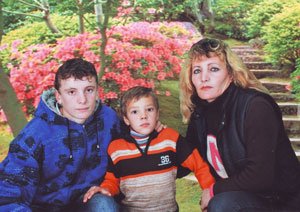 The Albanian family is now the target of a very dangerous phenomenon: violence within it. The Prime Minister, Berisha, taking the leader of opposition, Edi Rama, as the example of family violence, is recalling the attention clearly admitting the incapacity of the state to face this phenomenon that is destroying many Albanian families. While in the Albanian metropolis, an individual like the head of the SP, Edi Rama, is distinguished as one of those violating the family values, imagine the “Calvary” in which is going through in the Albanian province Vjollce Mustafa and her two sons. By normal people it is considered as one of the most important moments, but for Vjollce Mustafa, the year 1993, when she married Gazmend Mustafa was the beginning of her suffer in first hand and then for her sons who came in her life. According to the tradition, Vjollca didn’t know her future husband and didn’t knew about his mental problems and alcohol addiction, what she suffered later along with her children. Since the first months of her marriage, Vjollce was prey to a great psychological and physical violence. Her husband, Gazmend, who was recovered at the hospital in Italy and in Shkodra for mental problems, used violence on her on regular basis, often “drugged” by alcohol. The situation was often worsened by the deep economical problems and an extreme poverty, while their survival was based, like for many families, on the social assistance of the State, not sufficient even to stay alive. With the years, Vjollca brought two children to life, Fatlum Mustafa, now 15 years old and Eduard Mustafa, now 7 years old. The economical situation became very hard to handle, while the misery pushed her husband, Gazmend, to use more violence. Violence now wasn’t only on Vjollca, but on Fatlum too and then on Eduard. The psychological problems of Gazmend and his alcohol addiction pushed him to attempt to kill his youngest son, Eduard, or even pushing him in suicide. He had abandoned his family from many years now, and Vjollca with her two sons were going through extreme moments in their life, living an open death threat for her and her sons. Every time he turned back to his family, Gazmend Mustafa continued using violence, using now, not only his hands but also other means. Vjollca called the police time after time, yet they only sent her husband at the hospital, where after passing some time, he was back home to terrorize again his wife and children. Tired by violence and numerous problems, Vjollca and her two sons had to leave without telling anyone toward Montenegro, a country where Albanians can fortunately go without needing a visa. They hide in Podgorica, by the Association in Defense of the Violated Women, yet they felt menaced even there, by Gazmend Mustafa and his family, who followed them now to kill them. To escape once and for ever from that criminal husband and father, who many times attempted to kill them, Vjollce asked the Tribunal of Shkoder for divorce from her husband, Gazmend Mustafa in 2006. This caused an irritation not only on Gazmend Mustafa, but also on his family too, who considered themselves “ashamed” according to the Canon, so they wanted to revenge by killing Vjollce and her sons. Since that time, none knows where they might be, or what happened to Vjollce and her sons, Fatlum and Eduard, whom we wish didn’t fall in the hands of the criminal husband and father, Gazmend Mustafa, one of many who use violence in the Albanian families, while the State in unable to stop this phenomenon.
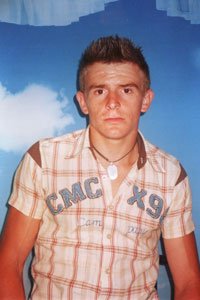 According to the last data of the Albanian Prosecution, 9800 people were murdered by self-justice in the last 18 years. This is the official record of the Prosecution, but the truth is much bigger, if we consider then the age-long conflicts. Nevertheless, the phenomenon of blood-feud is a very hard wound which instead of being healed by severe laws or by creating police structures in prefectures, is becoming deeper and deeper. 11000 children cannot attend school because of blood-feud. This is a very huge number considering a population of three million of inhabitants within the actual borders. One of the innocent victims is Besmir Taf Fikaj, from Postribe of Shkoder. According to the mayor F. Shabaj, many years ago, in 1997, J. Likaj killed his father, the late Taf Fikaj, and now they were looking for him to kill. In these conditions, to escape the revenge, Besmir Fikaj escaped abroad for a never return in his country. In this country called Albania you feel ashamed when you’re editing that according to statistics of the Prosecution, only in the villages of Shkoder there are 2200 families in conflict. There are hundreds of murders within the family especially for property conflicts. 120.000 files with property conflicts are waiting for a sentence of the Tribunal in this little country where there’s no chance of human rights and freedom, or even caring about life and condemning the guilty by law. Many murderers are free, for justice is done if the families in conflict reconcile according to the Canon of Lek Dukagjini, so the case is closed. Even in these cases, the forgiven murderer might kill again, asking again for forgiveness. There’s also the phenomenon of not reporting murders, as they want to revenge for themselves, to replace the “honor”. According to the leader of the Albanian Peace and Reconciliation Missionaries Association, there have been many reconciliations, but in the case of Besmir Fikaj the many attempts had no results. Thousands of people are hiding to escape the bullet of revenge but there are also thousands of guns ready to find the moment of revenge. The rules of the Canon and self-justice are a true law.