|
Behind the shut in doors
There are 13700 Albanian families living shut in, behind the “high
security” walls, fearing their enemy’s gun ready to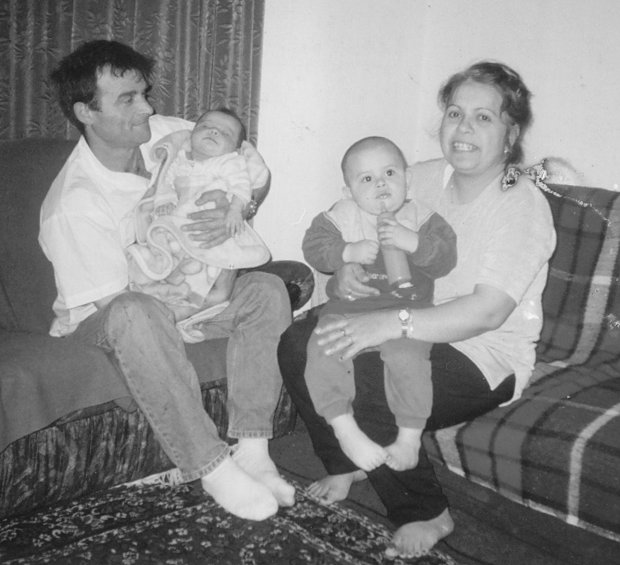 shoot on them. There are 1024 Albanian children
deprived of instruction though at the right age to go to school. But, what’s
the number of all those living shut in, or that of the children, not yet at
the age to attend school, even though they are innocent angels. On one hand,
it is very difficult to give an exact number, while at the other hand we
think that even the official number is not real, for as far as the Canon is
concerned, in its’ authority and nature, not everything is made known to
everyone. This however is a tragedy that delays the integration of Albania in
the Euro-Atlantic structures. One of those thousands of people living shut
in, is Qerim Rustem Likaj, born on September 5, 1964 in the village of Kullaj in the municipality of Postrriba in
the District of Shkodra. He is the father of four
children and is suffering this because of a conflict of his brother, named Qamil Likaj. His brother caused
a tragedy, as he was drunk, during a conflict of the moment on December 13, 1995 in the
village Ura e Shtrenjtë
of the same municipality, where there were four young guys and the family of Latif Shabani. The tragedy
ended with the death of Nerim Bajraktari
and Latif Shabani’s wife.
Since that day, Qerim Likaj
and his family are living shut in, for there is no exception for the
innocent, according to the Canon. As far as the law is concerned, it is
likely inexistent. The Albanian Constitution is being considered, and it has
no chance to be considered. shoot on them. There are 1024 Albanian children
deprived of instruction though at the right age to go to school. But, what’s
the number of all those living shut in, or that of the children, not yet at
the age to attend school, even though they are innocent angels. On one hand,
it is very difficult to give an exact number, while at the other hand we
think that even the official number is not real, for as far as the Canon is
concerned, in its’ authority and nature, not everything is made known to
everyone. This however is a tragedy that delays the integration of Albania in
the Euro-Atlantic structures. One of those thousands of people living shut
in, is Qerim Rustem Likaj, born on September 5, 1964 in the village of Kullaj in the municipality of Postrriba in
the District of Shkodra. He is the father of four
children and is suffering this because of a conflict of his brother, named Qamil Likaj. His brother caused
a tragedy, as he was drunk, during a conflict of the moment on December 13, 1995 in the
village Ura e Shtrenjtë
of the same municipality, where there were four young guys and the family of Latif Shabani. The tragedy
ended with the death of Nerim Bajraktari
and Latif Shabani’s wife.
Since that day, Qerim Likaj
and his family are living shut in, for there is no exception for the
innocent, according to the Canon. As far as the law is concerned, it is
likely inexistent. The Albanian Constitution is being considered, and it has
no chance to be considered.
Vasel Gilaj
Dreams cut in half
The young Mikel Zef
Luka, born on November
24, 1985 in Shkodra, like many other
his friends of the same age, chose to leave Albania, as the only way to be
free. The dreams of the Albanian youth are being cut in half by the
charlatans, the unfaithful, swindlers, thieves, smugglers dressed with power.
Mikel’s father, the former activist of the
Democrati c Party, the businessman Zef
Luka was killed since the disorders of the dark 1997, when the charlatans
violently usurped the power. His mother has no sign of life and none knows
either she is alive, or where she could be. This young Albanian had no way to
live in this country where the crime is the highlighted word of the day and
night, where the criminals go around freely, even at the side of the
statesmen, judges, politicians, where the innocent are discriminated or even
eliminated by structures of political background. He was nearer to death than
life, that’s why he left, going as far as possible, by the unknown and
difficult ways of the occident. It is a never seen before tragic-comedy, to
have one’s life in danger while not yet eighteen, and trying to build up
one’s life outside ones’ country while not yet eighteen, as it is the case of
Mikel, after all those spiritual traumas. These
cases can only be found in Albania,
in this so called state that, without regret, you would better call it a
gangster state. The intellectuals, the youth, those who spend for democracy,
for the state of law, either are killed, or suffer violence, or are forced to
leave. c Party, the businessman Zef
Luka was killed since the disorders of the dark 1997, when the charlatans
violently usurped the power. His mother has no sign of life and none knows
either she is alive, or where she could be. This young Albanian had no way to
live in this country where the crime is the highlighted word of the day and
night, where the criminals go around freely, even at the side of the
statesmen, judges, politicians, where the innocent are discriminated or even
eliminated by structures of political background. He was nearer to death than
life, that’s why he left, going as far as possible, by the unknown and
difficult ways of the occident. It is a never seen before tragic-comedy, to
have one’s life in danger while not yet eighteen, and trying to build up
one’s life outside ones’ country while not yet eighteen, as it is the case of
Mikel, after all those spiritual traumas. These
cases can only be found in Albania,
in this so called state that, without regret, you would better call it a
gangster state. The intellectuals, the youth, those who spend for democracy,
for the state of law, either are killed, or suffer violence, or are forced to
leave.
Zog Hysenaj
Time for kidnapping
The violence, kidnapping and many times even murders have gained the
“status” of the “common” in Albania, either by night or by daylight, either
in town or in the villages, whenever and w herever. It seems to be a good time for kidnapping,
in a total absence of a state of law. After the unbearable “fines” requested
by criminal segments during these last times, businessmen like Miri i Xhikes, Florian Vila etc. were killed,
while the state is telling tales even in the parliament. herever. It seems to be a good time for kidnapping,
in a total absence of a state of law. After the unbearable “fines” requested
by criminal segments during these last times, businessmen like Miri i Xhikes, Florian Vila etc. were killed,
while the state is telling tales even in the parliament.
This is what lastly
happened to Lazer Ton Haxhari,
coming from America.
Lazer and his wife Drande, were to face big
“fines” and one night in their house in Rragam of Shkodra, robbers forced their house trying to steal their
money. On reports we have, they escaped death miraculously, as the dogs woke
up the neighbors who went in their help. The robbers left in a car toward Shkodra. Lazer Haxhari was on the target of the communists even during
the dictatorship, while his father, Ton Haxhari was
a political prisoner. The couple Haxhari
was subject to violations and death threats too, by some criminals who search
for possibilities of robbery and violence, as these ones had concluded that
they have money and not many relatives here, for the two daughters of them
are in Italy
and their son Anton is in America.
Lazer and Drande Haxhari, thus had to go back to their son in America, so
that they might not become victims like Florian Vila and Miri
i Xhikes.
Albert Vataj
A Calvary of sufferings for
the family Prela
One of the many families who suffered from the communist system was
that of Kel Prela. The Calvary of sufferings started since 1955 when his
grandfather Lek Prela was
condemned to 8 years of prison for agitation and  propaganda against the communist regime. Kol Prela, his cousin, was also
condemned to 25 years of prison, going on with his brother Aleks Prela, condemned to 4
years, accused for escape attempt. In 1978 he was enrolled in an engineer
corps, set apart only for those with a bad background. In 1979 he was
arrested for agitation and propaganda, and was set free as there was no
evidence, making him go back to military service, where was condemned to 11
months of prison. His family was interned in Dushaj
of Tropoja. In April 1984 was condemne
to 7 years for escape attempt. He was set free in 1988, because of an
amnesty, while his health was really bad because of the sufferings in prison
and investigation room. In May 1989 he was admitted at the Psychiatric Hospital of Shkodra and a surgery
intervention was later made in his column at the Military Hospital
in Tirana. The hard surgery intervention at the age of 31 would cost him a
lot, while he is still suffering. In 1989 his family comes back from
internment. propaganda against the communist regime. Kol Prela, his cousin, was also
condemned to 25 years of prison, going on with his brother Aleks Prela, condemned to 4
years, accused for escape attempt. In 1978 he was enrolled in an engineer
corps, set apart only for those with a bad background. In 1979 he was
arrested for agitation and propaganda, and was set free as there was no
evidence, making him go back to military service, where was condemned to 11
months of prison. His family was interned in Dushaj
of Tropoja. In April 1984 was condemne
to 7 years for escape attempt. He was set free in 1988, because of an
amnesty, while his health was really bad because of the sufferings in prison
and investigation room. In May 1989 he was admitted at the Psychiatric Hospital of Shkodra and a surgery
intervention was later made in his column at the Military Hospital
in Tirana. The hard surgery intervention at the age of 31 would cost him a
lot, while he is still suffering. In 1989 his family comes back from
internment.
In November 1990 he was one
of those young men who helped Dom Simon Jubani to
celebrate the first Mass in Shkodra at the chapel
in the catholic cemetery. The police arrested him again, beating and menacing
him to death. The democratic movements find him in the first protests of March 31, 1991,
participating even at the protests of April 2, 1991, while 85 were wounded and 4 were killed. Kel Prela was again arrested
and kept for 9 days at the police station, where he was beaten and menaced.
On September 14, 1998,
during the protests for the murder of the deputy Azem
Hajdari, he was arrested and kept at the police
station for one night. As facing menaces from the socialist regime, he was
forced to leave Albania
and emigrate in Italy.
On September 10, 1990,
while driving in Italy,
he was shot by two other people driving another car, but he escaped death
miraculously, giving thanks to God. In these circumstances he felt forced to
emigrate in USA,
while there is no warranty for his life if he returns in Albania as
the members or sustainers of the SP trail him. This democrat, who fought for
freedom and democracy, has his life and his family in danger in Albania.
Zef Nika
The price of persecution
The almost two thousand years old history of Christianity has made it
clear that Albania was one of the first nations who accepted the life giving
doctrine of Jesus Christ. The preacher of this faith in the Illyrian
(Albanian) areas was Saint Paul
himself, the Apostle of Christ. Because of this faith, the Albanians paid the
high price of invasions and regimes that went across these blessed regions.
First of all, after the split of the Roman Empire in two parts, the
occidental and the oriental (Byzantine), while the oriental “gave life” to
Schism and took along with this Schism (the Orthodoxy) half of Albania, Toskeria, while the Catholic North (Gegeria)
was faithful to the Roman Church, without interrupting the relations with it.
This split was unfortunately “institutionalized” with the over four centuries
of invasion of the Ottoman Islamic Empire, and even after that, especially
after 1944, when the (the so called Albanian) Communist Party came on power,
though it was indeed made up by the Schismatic. In a very short time,
hundreds of catholic priests were shot, even if they were holding fast to the
binomial Religion and Fatherland. Hundreds of cult objects and institutions
of the Catholicism were destroyed or spoiled, though they radiated history
and civilization. During the communist regime, after the ’70 the religions
were prohibited by law, but the Catholic Religion was the one that suffered
the most and the catholic believers were the first prey of the communist
persecution. They were deprived of school, jobs and leadership, while it is
still reminded in Shkodra, the “sincere” expression
of a communist leader, telling a “peasant” who was looking for job, that he
had two disadvantages that didn’t allow him to have a job, he was a peasant,
but over all he had the “misfortune” to be a catholic. The years went on and
the God had the grace to make the communism fall, leaving room to pluralism
and democracy. The most of catholic people supported and was involved in the
anticommunist parties, especially the Democratic Party. The victory of the DP
and the other right winged political forces in 1992 made the autochthon
catholic community taste for the first time high leading positions in
government, state and party. We had a respectable representation in
Ministries, Parliament (the Chairman of the Parliament was Pjeter Arbnori), as well as in
other local levels, and dozens of deputies. During the democratic government
1992-1997, the three Religions had an indisputable balance of power, what was
promising for a firm and secure life in common. During this period of
government there was a right relation between Toskeria
and Gegeria. With the typical Bolshevik revolution
of the social-communists of 1997, fell from power not only the democratic
state, but even the column Gege-Catholic of it.
Hundreds of democrats, mainly of catholic religion were killed, wounded,
persecuted just like during the half century of communist regime. Foreign
businesses (mostly Italian) that had their activity in the Northern
Albania (Shkodra etc.) had to leave
their activity, causing a catastrophic unemployment. The investments of the
democratic state (1992-1997) were turned upside down by the power of the
“new” communists, who tried to send those investments in South (Toskeri) like their fathers did, as it is the base of the
second socialism mixed with Orthodoxy and Fundamentalist Islamism. During
this period of socialist government there was an “uncontrolled” demographic
movement, while many socialist militants have come from the mountain areas,
occupying “vacant” places, giving a hard time to the autochthones, mostly
catholic. In the socialist government now there is no place for any catholic.
Notice the three main leaders of the country, the President, the Prime
Minister and the Chairman of the Parliament are Orthodox and Muslim, as well
as the other ministers. It is worth to mention that even when there was an
attempt to have two catholic ministers (Preç Zogaj and Zef Preçi), and in less than one month they didn’t just leave
but they almost ended in the communist guillotine. Following the
anti-Catholic politics the government has made up a powerful business with
Muslim and Orthodox administrators, excluding the Catholics. The Mafia of the
state is now powerful guiding all the crimes and the national and
international trafficking, becoming a possible danger to the region and
beyond. A clear evidence is when the socialist state menaces to death the
spiritual pastors of the Catholics, is when the head of the government and
the socialists, Fatos Nano, menaces the priest of Velipoja, At Marjan Ukaj, in October 2000, during the local elections. This
was because the sociaslit candidate in this
municipality was almost losing and the catholic doctor Ndue
Gjeka, candidate of the Demo Christian Party was
winning. Other evidence is the murder of the Spanish priest in Durres on May 2000, the
late Joakim Bernard, while the killer was found
after three years, following with another murder as considering him a man of anti-catholic habits. During this anti-Albanian and anti-catholic governing monsters like Mujahidins
“rose”, killing innocent people in the name of Allah, while the first prey
were surely the Catholics. In Shkodra, on January
2002, “rose” Sadik Koniqi,
who had a list of 40 people to be executed. He
couldn’t do this thanks God, but was arrested after he had killed the wife
and the 4 years old son of the family Simoni. It is
worth to say that Sadik said he went at the mosque
every time he committed a murder, while his books were the Koran and the
books of E. Hoxha.
In these last days in Berat was found Rexhep Sadikaj, who planned to
kill 30 people. Both of them were “excused” by the state as crazy. But isn’t
the state crazy to leave the Northern Albania
in a state of development worth of Africa
and not Europe? Why doesn’t it give the
Catholic Community the place it deserves, when as Father Zef
Simoni said in April 2002, from 54 Ambassadors
Albania has in Europe, only one is catholic and he is in Vatican…
Why was not found yet who
wanted the explosion at the monument
of Fishta
in Shkodra in 2001?
If other evidence is
needed, there is a lot, for as a result of this persecution the state could
even often “mine” the intra-religious life in common and the future. Thousands
of emigrants have left and the Catholics have the highest rate in comparison
to the population, for this state has made them lose even their future and is
also running the risk of losing their Faith, life and everything… How far?
The correspondent of “Shqipëria Etnike”
Fatlum Lekiqi from Boriç i Madh in Malesi e Madhe should die
because of the canon of the mountains!
His name is Fatlum Lekiqi.
He was born on june 10, 1981, in Boriç
i Madh, 8 km from Koplik
of the municipality
of Gruemira
in Malesi e Madhe. He is
the son of Naim Lekiqi
and Fiqiret, an Albanian family from Podgorica of Montenegro. Their fo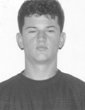 rerunners came in Boriç i Madh over three hundred years ago. Even though they keep
the best Albanian traditions, they are still considered from Podgorica by the inhabitants, this is because they speak
very well the Serbo-Croatian language. The members of the family Lekiq live actually in the villages Boriç
and Shoj i Ri and have
never moved from there, even during the political changes in Albania. Their
income was mostly from agriculture, especially from viticulture. In this
environment was born and grew Fatlum, his brother Akil and his younger sister Alkida.
He aspired to study in the Albanian universities and had many ideas about his
professional instruction, but his dreams were suddenly cut in half. rerunners came in Boriç i Madh over three hundred years ago. Even though they keep
the best Albanian traditions, they are still considered from Podgorica by the inhabitants, this is because they speak
very well the Serbo-Croatian language. The members of the family Lekiq live actually in the villages Boriç
and Shoj i Ri and have
never moved from there, even during the political changes in Albania. Their
income was mostly from agriculture, especially from viticulture. In this
environment was born and grew Fatlum, his brother Akil and his younger sister Alkida.
He aspired to study in the Albanian universities and had many ideas about his
professional instruction, but his dreams were suddenly cut in half.
It was 1100 am
of October 22, 1999,
and Naim Lekiqi, Fatlum’s father was having a drink in the bar of the
village. Because of the alcohol he argued with the brothers Rexhep and Ragip Shabaj, from Dragoç, living
from many years near by the family Lekiq in Boriç i Madh. A few moments
later, Naim hurt as beaten by the two brothers Shabaj, went home and came back with a gun shooting on
the two brothers as they were coming out of the bar, so they died instantly.
Since then, Naim and the other members of the
family have lived shut in, waiting the answer that didn’t delay. On March 31, 2000, ad down,
members of the family Shabaj shot dead Naim Lekiqi at the door, yet it
was not considered all closed. According to the canon of the mountains, which
is the law where the state isn’t present, the family Shabaj
has to kill one of the two sons of Naim, either Fatlum or Akil. There are four
years they’re living shut in and none cares for them. The missionaries of
peace and the structures of the state, though they tried, there was nothing
done to conceal the two families. The mother Fiqiret
with Akil and the engaged daughter Alkida found shelter somewhere near by the relatives of
the fiancée of Alkida, the older brother Fatlum, followed by the shadow of death, because of the
gun of the avenger, could leave his birthplace and be established somewhere
in the western countries, where the freedom and life are defended by law. Fatlum possibly will never come back home as death waits
for him. The gun of the family Shabaj is ready to
shoot on him, though he is not guilty, yet in the canon it is written: Blood
is avenged with blood…
Rifat Ymeri
|


