The documentary on CNN, the 12-years old: How I was trafficked
Roza was deceived by her boyfriend, the father in law raped her.
The tutor was freed by the judge, his uncle and bought a three floor house in the village.
“The traffickers wanted me dead”. This is what the author of a documentary on the history of trafficking for prostitution of a 12 years old Albanian, Mimi Charakova, reported in an interview released to CNN. Her documentary was firstly transmitted in London, while on December of the last year got the Courage Prize of the Human Rights International Festival in 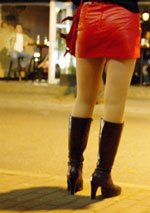 New York. The history, already international, tells the story of the bad luck of Roza, the girl from Albania, who had a hard childhood, was raped by her father in law and then trafficked abroad for the sex “industry”. “She was wearing a pink shirt and her preferred shoes when she left her village in Albania. Her mother called her aloud before she got in the red “Mitsubishi” of her boyfriend, but she didn’t turn around to say “Good-bye!”. She was twelve and was mad”. This was written in the script of the documentary of the American director Mimi Charakova. The documentary is entitled “The sex price” and the script is about an Albanian story, a teenager from a village who met a boy older than her, and falls in love. Follow her dreams for a new life up to the trip to Italy by motorboat and the surprises of her destiny there. New York. The history, already international, tells the story of the bad luck of Roza, the girl from Albania, who had a hard childhood, was raped by her father in law and then trafficked abroad for the sex “industry”. “She was wearing a pink shirt and her preferred shoes when she left her village in Albania. Her mother called her aloud before she got in the red “Mitsubishi” of her boyfriend, but she didn’t turn around to say “Good-bye!”. She was twelve and was mad”. This was written in the script of the documentary of the American director Mimi Charakova. The documentary is entitled “The sex price” and the script is about an Albanian story, a teenager from a village who met a boy older than her, and falls in love. Follow her dreams for a new life up to the trip to Italy by motorboat and the surprises of her destiny there.
The Albanian girl. “She was Roza and was constantly raped by her father in law. She couldn’t tell her mother, because she new she would be sent away and ashamed. When they got to Italy, her boyfriend asked her to work for him as a prostitute. At first she thought he was kidding, as she left her home, her family, to stay with the one she loved, whom she dreamed to marry with. He was older and she was in love. But the man she loved brought her back to reality. He reminded her about the money spent for the trip, the false documents, dresses and everything else to make her look beautiful. She wept, while he cut her knee with a knife to make her stop. For the next seven years it was the sign to remind her he was the only one she had”. The violent and criminal story is told by the protagonist herself, who is now hiding in shelter for the trafficking victims. She told she reported her trafficker and tutor as soon as she could. “But the judge was his uncle”, the Albanian girl told. The violent author was set free, according to her. He who used her in violent ways, by beating and threats in Ita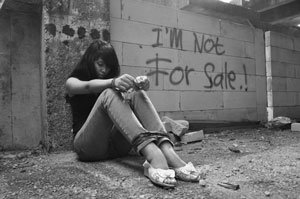 ly and Belgium, left Albania for a while until things “cooled down”. After the report to the police, while under social protection, Roza says she knew about her tutor that he’s free, never charged and lives in Albania. According to her, he bought a three floor house in her village in North Albania. ly and Belgium, left Albania for a while until things “cooled down”. After the report to the police, while under social protection, Roza says she knew about her tutor that he’s free, never charged and lives in Albania. According to her, he bought a three floor house in her village in North Albania.
Forsaken. What happened to Roza was very serious. Her family denied her, her relatives called her a whore and her mother, still disappointed, doesn’t know that the first who abused Roza was the one she loved. The documentary shows Roza’s actual situation. She is kept closed in a victims rehab center, while her enriched tutor is free and without charge. The author of the documentary, well known in the photography area, explains that she followed similar stories beyond Albania, but the story of Roza was particular. The author was gathering testimonies and materials for seven years to complete the story and realize the documentary.
The violence of the state-party toward the opposition
At the countdown of the last 80 days remaining to the parliamentary elections in Albania, the political pressure and “fight” between the two camps is getting harder, even in every town and district of the country. A few days past we witnessed a police operation beating and arresting the mayor of Kavaja, elected by the people there, representing the Socialist Party, because of an incident during a match, which became a political incident, also proven by the decision of the Court of Tirana to force Elvis Roshi to be present until the end of the process. There are many cases like this, not only with the elected, in leading positions of the Socialist Party, as well as many other members and simple activists, who endure the pressure of the police, firing or even death-threats.
In Shkodra, the so-called center of the Democratic Party, during the last parliamentary elections of 2009, the biggest party in opposition got 4 elected, and this was due to the work of the elections managing staff of the Socialist Party, engaged in defending the votes of the citizens of Shkodra. One of the families with the greatest contribution for the Socialist Party in the north’s biggest town is that of Musa Heta. He is a member of this party since 1991 as well as a candidate during the elections of 2005 and member of the municipal council of Shkodra for two sessions and member of the leadership of the Socialist Party for Shkodra. His engagement was followed by his son, Luan Heta, running in 2009, and a member of the municipality council in 2001, member of the district council as well as running for president of this council against Maxhid Cungu of the Democratic Party, a battle where deputies and vice-ministers were involved in order to get this important seat in Shkodra at any cost. Luan Heta is actually leading the Socialist Party in Shkodra, continuing his work in opposition in a very difficult town where political differences are very evident. In all his engagements, as a member of the family Heta, as well as an activist of the Socialist Party working in the management of the elections’ campaigns, was helped by his younger son Ermal Heta.
Ermal Heta was the President of the 280th EC Commission during the elections of 2009, while his brother Luan, was running. He built the entire campaign in the logistic and media aspect. After the elections, he had a ve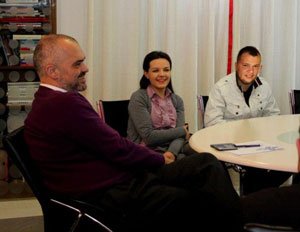 ry important play in the Elections’ Management Central Commission of Shkodra, during the counting process, as part of the team that gave the best result to the Socialist Party in Shkodra with 4 deputies elected, while they could never get more than 1 or 2 deputies in this area. ry important play in the Elections’ Management Central Commission of Shkodra, during the counting process, as part of the team that gave the best result to the Socialist Party in Shkodra with 4 deputies elected, while they could never get more than 1 or 2 deputies in this area.
The involvement of the entire family Heta in the local policy of the Socialist Party increased pressure toward the family members and their business, by causing them to be fired, get arbitrary bills, culminating with the attack against Ermal Heta by unknown people, who threatened his, if he would continue to be an active part of the Socialist Party during the elections of June 23rd. Ermal Heta didn’t report this causes to the police, as the police is full of militants of the political party on power, and it wouldn’t do anything, but could even make those people take any extreme action against the brother of the leader of the Socialist Party in Shkodra. In this situation, Ermal Heta left Albania, not only to protect himself but also his family, by any pressure or threatening act moved by politics.
Many are those who left Albania for political motives during these 22 years of transition, especially during the years when the country is led by the Democratic Party and Sali Berisha, who uses every mean to fight his opponents. This fight is now enlarged reaching all the levels, through a mechanism that fires people, imprisons mayors of the Socialist Party, for political motives, as it was the arrest and almost execution of the mayor Kleves Muja, what happened within the prison cells in Shenkoll, while there was no intervention of the police, what put the life of the one elected by people in serious danger, just because representing the Socialist Party. Brunilda Dibra
When the medieval Kanun challenges the State the blood-feud keeps bleeding…
The medieval Kanun of Leke Dukagjini was followed like a “constitution” over the social, family and State relationships, for centuries in the Northern Albania (mostly in Malesi e MAdhe, Dukagjin e Shkodra). In those abovementioned areas the Kanun made a challenge to the State too, even in the 21st century. One of the paragraphs of the Kanun that mostly endured is that on the blood-feud. The articles (if such can be called), concerning the blood-feud, demand murder for murder, what keeps murder going on endlessly, from family to family for all the generations. Often the blood-feud continues for decades, even centuries, as it is written in this medieval code, the blood is never missing. To prove this we’re consider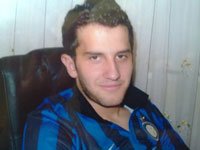 ing the family Likaj case, from Zagora (Malesi e Madhe) and the family Shala, still in blood-feud among them for almost a century. The last murder for blood-feud occurred in 1944, when Gj.K. of the family Shala killed for blood-feud the late Bajram Smajl LIkaj (from the Likaj family), and after that murder, the communist dictatorship came on power and the blood-feud wound seamed “healed” for a long time, and this enmity was considered over. But, this wasn’t the case, for the family Shala” though being the last to kill, made known to the family Likaj, addressed to Ragip Likaj (whose uncle, Bajram Likaj, they’d killed in 1944,) that they were in debt and the blood would never miss. That meant that Ragip was already in blood-feud with the family Shala. Ragip, unfortunately, was the only one male left in the family Likaj, and he has a son, now in blood-feud with the family Shala. Elsad Ragip Likaj, bron on May 10th 1995, the only son of Ragip, had to leave Albania at any cost, in order to escape the revenge of the family Shala. Now, we can’t give the names of those menacing Ragip, but we can only say that the State and the reconcilement associations tried to meet the two families, but the family Shala doesn’t want an agreement, instead they keep on threatening the family Likaj. We met the parents of Elsad Likaj, and they told us their fear of a possible revenge, already announced by the family Shala. Ragip told us how hard it was for them to send their son abroad, away from the sight of the avengers, since November 2011. Elsad’s father showed us a picture of his son, that he always kept with him. We decided to show his picture and we can see here a nice young guy with the innocence in his eyes, as people says “cannot kill for blood-feud”. Unfortunately, the opposite occurs in the northern areas of Albania, for the Kanun is over the law. We wish Elsad a long life, wherever he might be. Ndue Bacaj ing the family Likaj case, from Zagora (Malesi e Madhe) and the family Shala, still in blood-feud among them for almost a century. The last murder for blood-feud occurred in 1944, when Gj.K. of the family Shala killed for blood-feud the late Bajram Smajl LIkaj (from the Likaj family), and after that murder, the communist dictatorship came on power and the blood-feud wound seamed “healed” for a long time, and this enmity was considered over. But, this wasn’t the case, for the family Shala” though being the last to kill, made known to the family Likaj, addressed to Ragip Likaj (whose uncle, Bajram Likaj, they’d killed in 1944,) that they were in debt and the blood would never miss. That meant that Ragip was already in blood-feud with the family Shala. Ragip, unfortunately, was the only one male left in the family Likaj, and he has a son, now in blood-feud with the family Shala. Elsad Ragip Likaj, bron on May 10th 1995, the only son of Ragip, had to leave Albania at any cost, in order to escape the revenge of the family Shala. Now, we can’t give the names of those menacing Ragip, but we can only say that the State and the reconcilement associations tried to meet the two families, but the family Shala doesn’t want an agreement, instead they keep on threatening the family Likaj. We met the parents of Elsad Likaj, and they told us their fear of a possible revenge, already announced by the family Shala. Ragip told us how hard it was for them to send their son abroad, away from the sight of the avengers, since November 2011. Elsad’s father showed us a picture of his son, that he always kept with him. We decided to show his picture and we can see here a nice young guy with the innocence in his eyes, as people says “cannot kill for blood-feud”. Unfortunately, the opposite occurs in the northern areas of Albania, for the Kanun is over the law. We wish Elsad a long life, wherever he might be. Ndue Bacaj
Love turning out in tragedy for many couples
The enmity problem amongst many families in North Albania is a continuous source of tragedies and mess. Even love between two young people is considered “offense” according to the Kanun, as they fall in love without the permission of their parents.
Arvin Andrea Gjergji, from the village of Beltoje in the Municipality of Berdice in Shkodra was in love with Fetije 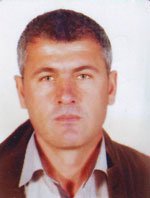 Çelepija from Shkodra. Her family didn’t agree with this, as they intended to get married, because he was a Catholic while she was a Muslim. The family Çelepija menaced the girl as well as the family Gjergji, if they were to get married. About 15 months ago, Arvin decided to take away his future bride, as the only way to crown their love in marriage. After the threats of the family of her, none dared to help him, for the Kanun would be immediately used. Only his cousin, Ardian Jac Gjergji, assumed to help them, despite the danger. He helped “kidnapping” the future bride of his cousin. Since that moment, the families Gjergji and Çelepija are in conflict, and the family Gjergji had to stay closed in. Ardian Gjergji is the one mostly in danger, considered the main responsible of dishonoring the family Çelepija, as he helped on “kidnapping” his cousin’s bride. Ardian Gjergji, likewise his cousin, Arvin Gjergji and his wife, lived closed in until one year ago, but since then there’s no address of where both of them could be. None knows where they are. Ardian Gjergji has still his family, his wife and the two kids, in Albania, living closed in in the fear of being killed in the name of the Kanun. Çelepija from Shkodra. Her family didn’t agree with this, as they intended to get married, because he was a Catholic while she was a Muslim. The family Çelepija menaced the girl as well as the family Gjergji, if they were to get married. About 15 months ago, Arvin decided to take away his future bride, as the only way to crown their love in marriage. After the threats of the family of her, none dared to help him, for the Kanun would be immediately used. Only his cousin, Ardian Jac Gjergji, assumed to help them, despite the danger. He helped “kidnapping” the future bride of his cousin. Since that moment, the families Gjergji and Çelepija are in conflict, and the family Gjergji had to stay closed in. Ardian Gjergji is the one mostly in danger, considered the main responsible of dishonoring the family Çelepija, as he helped on “kidnapping” his cousin’s bride. Ardian Gjergji, likewise his cousin, Arvin Gjergji and his wife, lived closed in until one year ago, but since then there’s no address of where both of them could be. None knows where they are. Ardian Gjergji has still his family, his wife and the two kids, in Albania, living closed in in the fear of being killed in the name of the Kanun.
Two days ago, Jac Gjergji, Ardian’s father, came out to buy bread in a nearby shop. It was about 21.30 and he though there was no danger, but his car was shot through the darkness. Fortunately the bullets didn’t hit him, so he went back quickly in his house.
Revenge in the name of Kanun is a life problem for Albanians, while the People’s Advocate, Igli Totozani himself says that about 10 thousands of Albanian families suffer the blood-feud problems. This is the official number given by the State, but the real number is greater. The Editorial Office |


