koka

nr 45 / 10 qershor 2003

alukit

numrat


    The two years of “Shqipëria Etnike”, two years of the free speech

    Looking at the numerous headlines of newspapers, magazines and various editions, it’s impossible to fail to notice a journal, authentic in its’ presentation as well as in its’ subject and naming. “Shqipëria Etnike” is the journal coming in by the efforts to bring newness to the free speech, confirming publicly that neither of the articles is the opinion of the editorial staff, it came silently, without any pomposity. Unlike any other Albanian journal, “Shqipëria Etnike” came in with modesty and devotion to represent and protect the free speech, the Man of I, unalterable. Many were skeptics either it would be able to face the heavy and holy duty this journal had assumed. Thanks to the hard sacrificing work of the journalists, collaborators of every sort of fields and ethnics, the journal was getting stronger day by day, in presentation, authority, marketing, unbiased, turning out to be a journal with an increasing audience, beating even the 12-13 years old journals. “Shqipëria Etnike” became a welcome guest in many Albanian families either within or abroad, in the whole Albanian-speaking Italian-speaking and English-speaking universe, all over the world.

    Shqipëria Etnike”, gave a useful lesson to the so-called prestigious medias, through its’ special way of presentation, problematic and freedom. This novelty, sacrifice, sanctity, talent, was all it offered to protect the free life, the free speech. What “Shqipëria Etnike” gave to the right of being a free citizen, would make envious even the snotty of the dark corners, who menace to take even our lives, without considering anything, as the North Albanian Journalists Union shouts to the whole world.

    The journal, in its’ walking, had obviously to meet the high barriers, face the storms of the meanness and medieval provincialism. Nevertheless, were just these battles that made the journal even stronger, loved, supported, challenging for the coming battles with the stoics, the mammoths of the religious indoctrination, the charlatans of the politics of bars, the latent medias, led by the people who have nothing in common with the culture as well as the hosts of the servile of the communist and Taliban moral.

    The last violence cases, constrain us, after consulting our colleagues in the occidental countries, to edit time after time a whole page of our journal in black, becoming this way an example, a model of protest, protecting the freedom of speech, until the criminals of the free speech might be roughly condemned. We appeal our readers as well as the whole world to support us.

    Shqipëria Etnike” came out in the most unwanted time the memory of the Albanian history had ever recorded. The country was still conserving in its’ tired memory, the relics of the collective madness, the consequences of which no other Sovereign could promote in this land of wonders and lasciviousness. The journal came at the time the politics, after 1997, was playing the tragic-comedy in the scene of tears and cries, guns and blood-feud, poverty and misery. It came in the time of absurd and walked on this land, as on a mined ground by some mad, who still fear the law, justice, the freedom of the free one, greatly supported by most of the Albanian people. “Shqipëria Etnike” new how to be a tribune of the free speech, of the opinion undressed of slogans, not adorned with stale ornaments and confusing phraseologies. In its’ pages came the two-colored reality we used to pay a high price to buy, as a magic reality stretched by projects and promises that couldn’t and didn’t want to be anything else but such. In these elections, we’ll knock with the logic the two colors of politics, especially the discolored one, which was destroyed even by America. We’ll also accept “mourning songs” for the discolored political force. “Shqipëria Etnike” could take off and will keep on taking off one by one, all the masks of the faces dirty of crime and perversity. It dared and dares to do what was difficult to those missionaries who exchange the question of free speech with prostitutes and drugs, while today, attempting to take the power back, cutting our way across with their cars, making phone-calls menacing to kill us, without counting whom they are facing and how far will bring them that short but shameful way. Our journal’s mean is to unite, as we are not less than 3 million brothers.

    Shqipëria Etnike” came, is and will keep on being what it is in your hands and hearts since two years ago, what you believed and believe it represents the free speech, no matter the race, conviction, ethnics, religion.

    Shqipëria Etnike” will be and keep on saying in Albanian the Albanian word. It will correct even any mistake it might have done on its’ way, as the acknowledgement and refusal of truth make the substance of culture.

Editorial by Sokol Pepushaj, Albert Vataj


    Pieces of life from Prizren

    We were in these last days in Prizren. The love of the Albanians for America, either in Albania or in Kosovo, seems to be the cause of a break between Europe and USA. Terror is powerful. Two days ago Isuf Description: D:\gazeta\Shqipëria Etnike\internet\she45\bashkim bejtja.jpgHilmia and Lulzim Faja were seriously wounded as a consequence of an old conflict. There we asked about the destiny of Bashkim Bejtja, about whom we cared in our journal of August 13, 2002. He still had no address. By the investigations we made, we came to know he is still wanted as a spy of Serbs. Bashkim’s father, as we recorded, was a teacher of Albanian language, a lamp of knowledge and a symbol of culture. The Serbs not only burned his house, but destroyed his family too. The strategy of the American politics to penetrate gradually in the Kosovar life seems to go on very slowly as the consequences of Milosevic and the politics has apparently confused the problems there. The pieces of life in Prizren are still dark and Kosovo is paying the lateness of occidental integration.

Zog Hysenaj


    Revenge and “betrayal” are desolating Kosovo

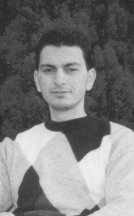
    As journalists of “Shqipëria Etnike”, we often, when visiting Kosovo, met unpleasant inconvenience. This because, instead of meeting an enthusiastic people, with great hopes for the future, we find a very pessimistic Description: D:\gazeta\Shqipëria Etnike\internet\she45\esat zekaj.jpgpeople, almost hopeless, at least for the present, confused by an undeclared “war”. This is not a frontal war, as it was before the liberation from the Serb colonizers, but a silent one. This is unfortunately a war amongst Albanians, while it seems like an invisible hand moving this “mechanism” of murder amongst brothers. The motives are known and they are suppositions of collaboration with Serbs, political divisions, as well as the rapid rise of the phenomenon of blood-feud. There are many cases like that, yet we chose to write about a real tragedy hitting the family Zekaj. All we are writing was reported by some relatives of this family. The family Zekaj lived in Prekaz, in the municipality of Skenderaj, and it was a native Albanian family. The members of this family were highly active in the political and social life of Kosovo. Fadil Zekaj was a member of DLK (Democratic League of Kosovo), as well as leader of this party in the municipality of Skenderaj. Hasan, his brother, was member of the Albanian party of KLA, as well as a leader of this party in this municipality. As an Albanian and nationalist, Fadil had engaged his son, Agron, in DLK. The real troubles for this family begun in 1997, with the great protest organized in this municipality against Serbs. This protest was organized by DLK, led by Fadil Zekaj and his son, Agron. The Serb police arrested Fadil and his son, Agron, treating them with barbarity. While arrested, they were asked about DLK and its’ structures, as well as all they knew about e military organization that was illegally rising in Kosovo, (later known with the name of KLA). After this, they were set free, to be arrested a second time in November 1997, when Fadil Zekaj was tortured for five weeks by the Serb police. This was a cruel investigation that only the Serb criminals were able to perform. On August 10, 1998, another great protest was organized against Serbs. At the head of it there were again Fadil Zekaj with his son, Agron, and his brother, Hasan. The Serb police arrested and ill-treated them, though the protests were peaceful. The Serb investigators divided them, following a separated investigation for each one. After this, rumor was spread that they told all they knew about DLK and their friends organizing the KLA, suspecting of them as traitors. The tortures had been so violent that Agron, Fadil’s son, died.

    Fadil Zekaj had a younger son, Esat Zekaj, who was born on June 1, 1981. He was so young and innocent to face the hard time this family was to meet in Kosovo. This hard time had two protagonists, who were the Serb invaders, and the organizers of the resistance against the Serbs, the same Albanians, who suspected this family for betrayal. Fadil Zekaj wanted to safe at all costs his son, now the only, Esat, as a storm of inspections and raids begun by Serbs, as well as by some Albanian fanatics, who suspected them as traitors. In order to save Esat, Fadil hide him somewhere, until the day he found a person engaged in clandestine trafficking, who after being paid, guaranteed to take the innocent Esat out of Kosovo. By this time, Fadil Zekaj had managed to vindicate his father, murdered by another Albanian family, some years ago. Fadil took revenge killing a member of that family. This wasn’t just to vindicate his father, but according to the wild canon of the mountains, he honored himself and his family. But at the same time he made life impossible to him and his kids, particularly to Esat, as the first prey for the family whose member Fadil killed to vindicate his father. Fortunately, Esat left Kosovo, say his relatives, but he will never be able to return, as revenge is ready to kill him, as the only son of this family. Fadil and his brother, Hasan Zekaj, also departed from Kosovo and have no address. The relatives of this family provided us with this picture of Esat Zekaj, making more touching the painful tragedy of this family, no more present in Kosovo. These relatives we met in the municipality of Skenderaj, wished God would make them live and “rise up” this family, once respected by the village of Prekaz and the entire community of the municipality of Skenderaj

Ndue Bacaj


    Hysen Curaj invests for democracy

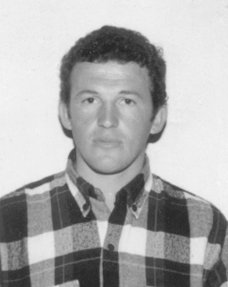
    Those who invest for democracy in Albania are persecuted, violated, murdered, in most of cases leaving behind long lasting conflicts that never end. The Albanian democrats are on target. Hysen Curaj, born on Description: D:\gazeta\Shqipëria Etnike\internet\she45\hysen curaj.jpgMay, 8, 1961, was a member of the Democratic Party since May 26, 1994, with the party card number 13475. He was several times member of elections’ commissions at the voting center of the village of Drisht, during the local elections as well as during those parliamentary. He and his wife, Syme, whose family was persecuted, suffered violence and threats by the communists. Myrto Dan Muhaj, the grandfather of Syme, was the standard bearer of Drisht until 1945, as well as one of the organizers of the anticommunist movement of Postriba of September 9, 1946. Since that day, he was arrested by the communist spies of Enver Hoxha, and spent 14 years in prison.

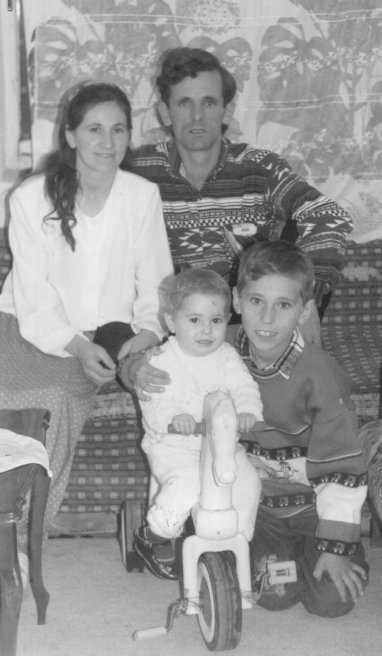
    The democrat Hysen Curaj, his wife, Syme, and their children, Serjan and Ibadete, were on the target of the descendants of dictatorship, the social-communists, just like numerous democrats who were killed during the six years of this bad governing. The children, Serjan and Ibadete are very young and innocent. They were born respectively on May 26, 1989 and April 26, 1997, nevertheless, they are victims of the dictatorial politics. Hysen’s brother, Xhelal Curaj, born on February 19, 1959, member of the Democratic Party since March 29, 1991, with party card number 37370, was on the target of the discriminating politics. After 1997, he was forced to leave Albania and was established in Turkey, where is still living. Xhelal and Hysen, these good Albanians, democrats and respected, were threatened by the communists during the parliamentary elections of June 29, 1997. And if you have no money or any powerful support, they are able to kill you, or pay to. Xhelal left since 1997, while Hysen with his family, though enduring as long as they could, had to choose the emigration way as the only safe way for him and his family.

Sokol Pepushaj


    Human freedom cut off

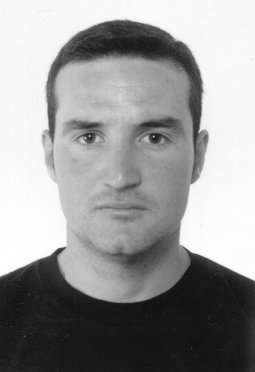
    The human freedom and rights are cut off in Albania, even threatened. The powerlessness of the law and Description: D:\gazeta\Shqipëria Etnike\internet\she45\arben rraboshat.jpgthe old Canon ways are the same old story of life. The conflicts made many people and families live shut in, fearing thebullet would cut their life in half, as it is happening every day and night. The young man you see in the picture is Arben Bashkim Rraboshta, born on August 22, 1980. Though innocent, his life is in serious danger. But what’s the reason? The cause is Tan Rraboshta, his cousin, son of his father’s uncle, who killed Bardak Bilani on August 20, 1996, after a brawl of the moment while their vehicles crashed. The author of the crime, Tan Rraboshta, died on February 15, 2003, because of a disease, while the family Bilani is now looking to kill Arben. The League of the Missionaries of Peace of Albania, according to the protocol Nr. 01/46 declares that intercession was done to close the conflict, resulting unsuccessful. This is an evidence of the lack of authority by the state and the insecurity of life for the Albanian citizens.

Correspond. of “Shqipëria Etnike


    The departure of the anti-communists from Albania, continues

    His name is Tom Gjeto Shabaj, born in 1957 in the village of Rapshë of the municipality of Kastrat in Malësi Description: D:\gazeta\Shqipëria Etnike\internet\she45\tom shabaj.jpge Madhe. Along with his wife, Luçije Ded Shabaj, were forced to leave Albania, because of the very difficult circumstances, as it was impossible to live in this country. The political circumstances are particularly difficult. Because of these circumstances, especially after 1997, with the violent return of the communists on power, Tom and Luçije Shabaj were often menaced by the security of state and unkown people in uniform. Their political activity was the motive of this. Tom and Luçije Shabaj were amongst the persecuted families in Malësi e Madhe, not only during the dictatorship of Enver Hoxha, but even after 1990. As the democracy came in Albania, their activity was even more intense, serving the democracy, though menaced, as we mentioned. The ace of these menaces is on December 31, 2000, when Tom and Luçije Shabaj were in their vehicle going from Rapsha to Tamara, as Luçija wanted to see her family. But they couldn’t go as 3-4 masked people stopped and beat, menacing them with guns. This was the reason they had to go at the hospital of Tamara where Toma was cured while his wife, Luçija, unfortunately had an abortion. This was because they did not agree to leave the Democratic Party. Toma was a member of that party as well as an activist and commissioner during the local elections of October 2000. He also participated in some peaceful protests for the return of democracy in Albania. Tom and Luçije Shabaj could not live without democracy in this country.

Vasel Gilaj


North Union of Journalists

Headquarters of Shkodra - Albania

Note of protest

The structures of the state will move to protect the journalists’ life only in case of victims amongst us!

To: Alfred Moisiu, President of the Republic

Servet Pëllumbi, Chairman of the Parliament

Fatos Nano, Albanian Prime Minister

James Jeffrey, American Ambassador

Osmo Liponen, OSCE - Tirana

Ermir Dobjani, Advocate of People

Luan Rama, Minister of Public Order


Doing our job in defending the rights and interests of journalists and people of media in general, in the Northern Albania, we have made dozens of petitions to the state’s institutions, those local as well as national, about the cases of violence, menaces and insults we suffered because of our job. The cases of the freelance journalist Lubonja, the editor Base and the dean Pango, show the growing pressure toward media and its’ representatives. The situation isn’t better even in North Albania, the view is rather dark. Violence comes from the Albanians toward their fellow countrymen, of the same blood and identity, while the foreigners, like the representative of OSCE in Tirana, Osmo Liponen, is concerned about the freedom of the press, whereas 47 Italian parliamentarians take the defenses of Albanian publicists.

    The very last case is the most threatening. From a car with the number plate of a Northern district, that was identified and reported to the Police and ISS, on May 31, at 12:10 (at noon time), there was the attempt to put forcedly in it an our colleague, editor of a well-known journal. This occurred after many phone-call threats in the name of Osama Bin Laden. The phone numbers are: 068 26 51 807, 069 24 67 711, 068 22 68 672, 068 26 92 353, 068 21 57 580, 069 24 56 965, 069 22 32 596, 068 26 59 731, 068 26 31 427. All these numbers have been reported to the competent organs one month and a half ago. Only the visit of the American Ambassador Jeffrey in Shkodra could frighten them to stop terrorizing explicitly for about one week. In Shkodra have unfortunately been recorded numerous cases of braking cameras, beatings, hits, explicit menaces to the journalists and cameramen, and the institutions of the state did not move. The police, prosecution or tribunals, in many cases, complain for missing evidence. Is it impossible to identify those who did the phone-call threats with the above written numbers? Is it impossible to identify those who drove the vehicle, as all the particularities (number plate, color and power) have been reported to the police?

    Respectful gentlemen!

    We cannot say such acts toward those representing media in general, come from the structures of the state in Shkodra, but our investigations bring to persons close to certain clans. We ask the state and its’ structures to make their intervention in protecting the journalists and people of media, much more now that they have the evidence. The opinion in Shkodra is that the state will be in motion only after cases of victims will be verified amongst our journalists or cameramen. But it will be too late!

North Union of Journalists